The hidden cost of poor alignment in industrial plants
In industrial environments, poor alignment or misalignment can create major operational problems. From increased energy consumption to premature equipment failure, poor shaft alignment quietly drives up maintenance costs, reduces reliability, and shortens the lifespan of critical rotating machinery.
For many plants across manufacturing, food processing, water treatment, mining, forestry, and heavy industry, alignment issues are one of the most overlooked causes of unplanned downtime.
Yet the actual cost often goes far beyond replacing a bearing or repairing a motor.
At TRS®, alignment forms a critical part of a complete predictive maintenance strategy designed to improve plant reliability, reduce reactive repairs, and keep rotating equipment operating at peak efficiency.
What is equipment misalignment?
Misalignment occurs when the rotational centre lines of coupled equipment are not aligned. This commonly affects:
- Electric motors
- Pumps
- Gearboxes
- Fans
- Compressors
- Generators
- Conveyor drives
Even a small amount of angular or offset misalignment can create excessive vibration, heat, and mechanical stress throughout the system.
In many cases, machinery may continue running while hidden damage gradually builds beneath the surface.
The real cost of poor alignment
Increased energy consumption
Misaligned machinery requires more force to operate efficiently. Motors must work harder to overcome additional resistance, increasing power draw and operating costs.
Over time, this energy loss can become significant across an entire industrial plant, particularly where large motors and pumps run continuously.
Precision laser alignment helps reduce unnecessary load and improves overall system efficiency.
Premature bearing failure
Bearings are one of the first components affected by poor alignment.
When shafts are not correctly aligned, uneven loading is placed on bearings, increasing friction and accelerating wear. This often results in:
- Excessive heat
- Lubrication breakdown
- Increased vibration
- Early bearing fatigue
- Unexpected equipment failure
Many vibration analysis programs identify bearing defects that originate from underlying alignment problems.
Higher maintenance costs
Plants operating with chronic alignment issues often experience repeated maintenance problems without fully addressing the root cause.
This can lead to:
- Frequent bearing replacements
- Coupling failures
- Shaft damage
- Seal wear
- Increased lubrication usage
- Repeated callouts and labour costs
Reactive maintenance becomes the norm instead of planned reliability management.
Over time, these “small” repairs accumulate into substantial operational costs.
Increased vibration and machinery stress
Excessive vibration is one of the clearest indicators of machinery misalignment.
Vibration affects not only the machine itself but also connected systems and surrounding infrastructure. Persistent vibration can loosen fasteners, damage foundations, and accelerate fatigue across multiple components.
Predictive maintenance services such as vibration analysis can help identify alignment-related issues before catastrophic failure occurs.
Unplanned downtime
Perhaps the most expensive consequence of poor alignment is unplanned production downtime.
When critical rotating equipment fails unexpectedly, the impact can include:
- Lost production
- Missed delivery schedules.
- Emergency repair costs
- Safety risks
- Expensive overtime labour
- Supply chain disruption.
In high-production environments, a few hours of downtime can cost thousands – or tens of thousands – of dollars.
That is why pro-active alignment and condition monitoring are essential components of modern reliability programs.
Why precision alignment matters
Traditional alignment methods using straight edges or dial indicators often lack the precision required for modern industrial machinery.
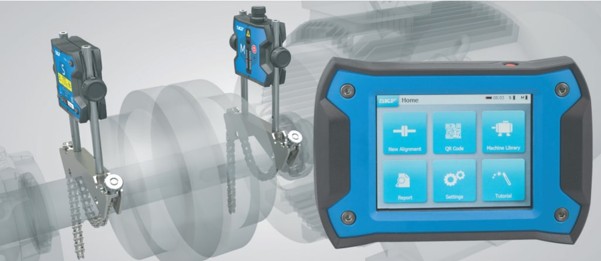
Laser alignment technology provides highly accurate shaft alignment measurements, helping maintenance teams achieve optimal machinery performance while reducing wear and energy loss.
Professional laser alignment services deliver numerous benefits:
- Improved equipment reliability
- Reduced vibration levels
- Lower operating temperatures
- Extended bearing life
- Reduced energy consumption
- Increased machinery lifespan
- Fewer breakdowns and shutdowns
At TRS®, laser alignment forms part of a wider condition monitoring and rotating equipment maintenance offering designed to support long-term plant performance.
Alignment and predictive maintenance go together.
Shaft alignment is an ongoing maintenance consideration, not just an installation task.
Machinery movement caused by thermal growth, vibration, pipe strain, foundation settling, or maintenance work can gradually introduce misalignment over time.
This is why leading industrial plants integrate alignment into broader predictive maintenance strategies that include:
- Vibration analysis
- Online Continuous Monitoring
- Dynamic balancing
- Thermography
- Lubrication monitoring
- Scheduled maintenance inspections
Combining these services provides early warning signs of developing faults and helps prevent costly equipment failure.
Reduce downtime and improve plant reliability.
Poor alignment is rarely just a minor maintenance issue. It is often the hidden driver behind escalating maintenance costs, reduced efficiency, and repeated equipment failures.
The good news is that alignment problems are highly preventable when identified early through proper condition monitoring and precision maintenance practices.
For industrial plants focused on improving uptime, reliability, and operational efficiency, investing in professional laser alignment and predictive maintenance delivers measurable long-term value.
Summary
Poor shaft alignment is one of the most common hidden causes of equipment failure in industrial plants. Misalignment in motors, pumps, fans, gearboxes, and other rotating machinery can lead to increased vibration, higher energy consumption, premature bearing wear, and costly unplanned downtime. Over time, these issues increase maintenance costs and reduce overall plant reliability.
Precision laser alignment helps industrial businesses improve machinery performance, extend equipment life, and reduce reactive repairs. When combined with predictive maintenance services such as vibration analysis and condition monitoring, alignment issues can be identified early before they result in major failures.
TRS® provides laser alignment, vibration analysis, and condition monitoring services across New Zealand to help industrial plants improve reliability, reduce downtime, and optimise rotating equipment performance.