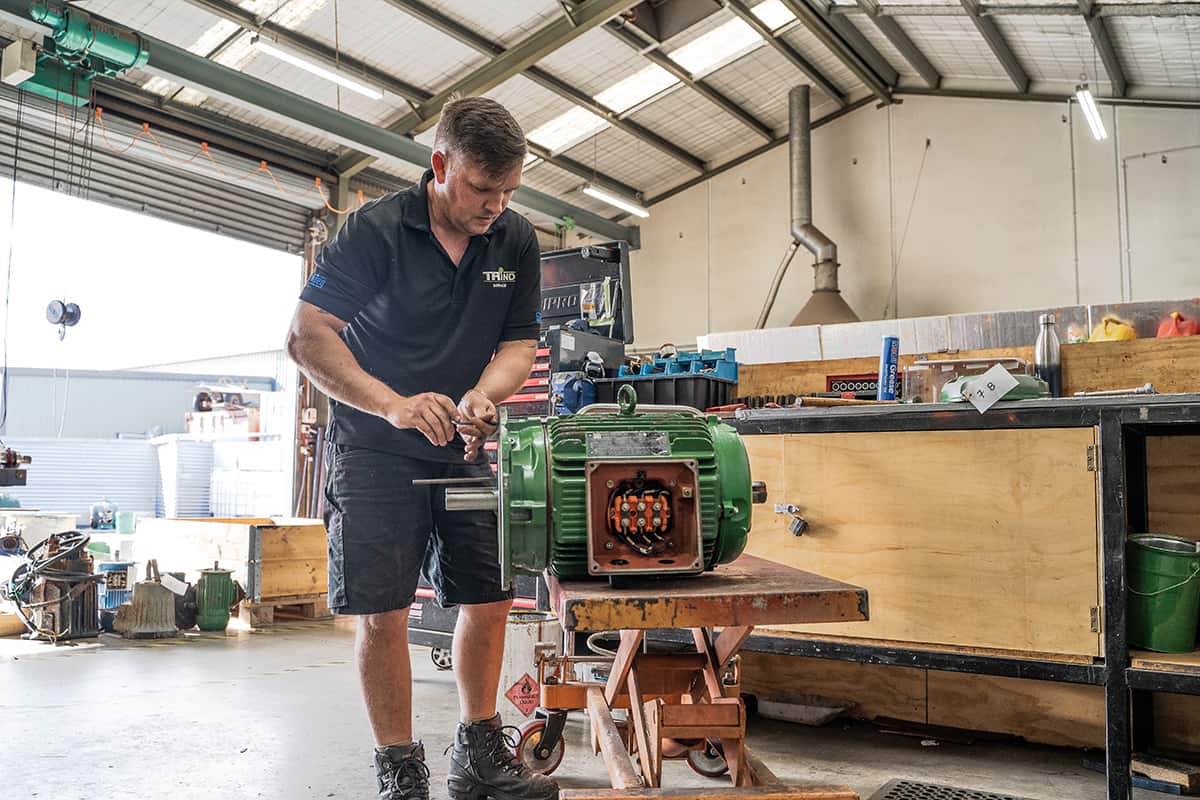
When should you repair vs replace rotating machinery?
In industrial environments, rotating machinery is essential. From pumps, fans and motors to gearboxes, conveyors and processing equipment, these assets keep production moving. When something goes wrong, the key question becomes:
Is it more cost-effective to repair your rotating equipment or replace it?
At TRS, we support industries across New Zealand with precision engineering, rebuilds, diagnostics, balancing and alignment, giving us deep insight into the lifecycle of rotating assets. Here’s our expert guide to making the right call.
When repairing rotating machinery is the best option
Repairs often restore machinery to full performance at a fraction of the cost of replacement. Repair is recommended when:
-
- The fault is localised and easily identified
Common issues like bearing failure, seal wear, misalignment or electrical imbalance can be diagnosed quickly and repaired efficiently.
- The fault is localised and easily identified
-
- Repair costs are below 40–50% of replacement
This is a widely recognised decision rule in industrial maintenance.
If the repair restores full performance and costs less than half of a new unit, repair is usually the smarter investment.
- Repair costs are below 40–50% of replacement
-
- The equipment is still structurally sound
If the frame, shaft, housing and critical components are in good condition, repairs can significantly extend service life.
- The equipment is still structurally sound
-
- Replacement lead times are too long
New pumps, motors and gearboxes can have weeks or months of lead time.
A high-quality TRS repair can often return machinery to service faster and with less disruption.
- Replacement lead times are too long
-
- The equipment is custom or hard to source
Older, imported or application-specific machinery may be extremely expensive or impossible to replace.
- The equipment is custom or hard to source
Our expert team can refurbish, machine, balance and rebuild these units to a high standard.
When replacement becomes the better option
There are times when repair is not enough, or simply not economical.
-
- Repeated breakdowns indicate deeper issues
Frequent failures suggest worn or unstable foundations, incorrect installation, fatigue cracking, or other systemic issues that a repair won’t permanently solve.
- Repeated breakdowns indicate deeper issues
-
- Repair costs exceed 50% – 75% of a new unit
Once costs creep above half the price of replacement, long-term value decreases.
- Repair costs exceed 50% – 75% of a new unit
-
- Major structural damage or wear
Cracked casings, heavily worn shafts, distorted frames or severe imbalance may make repair unsafe or unreliable.
- Major structural damage or wear
-
- Ageing equipment is inefficient
Older motors and pumps can consume significantly more energy.Replacing them with modern, efficient models may produce major savings over the equipment’s lifespan.
- Ageing equipment is inefficient
-
- Compliance or safety cannot be guaranteed
If the asset no longer meets New Zealand safety standards or cannot be restored to compliance, replacement is essential.
- Compliance or safety cannot be guaranteed
How to confidently decide: Repair or Replace?
Determining whether to repair or replace rotating machinery often comes down to understanding the severity of the fault, the remaining lifecycle of the asset, and the operational impact of each option. A structured approach helps maintenance teams make decisions that are safe, cost-effective and aligned with long-term asset performance.
Check out our simple, industry-recognised framework that balances cost, condition and reliability.
Repair vs Replace – Quick decision cheat sheet
| Consideration | Repair If | Replace If |
| Fault Severity | Issue is localised (e.g., bearings, seals, alignment) | Damage is structural, extensive or recurring |
| Cost | Repair is less than 40–50% of replacement cost | Repair costs approach or exceed half the cost of a new unit |
| Asset Condition | Core components (casing, shaft, housing) are still sound | Key components are worn, cracked, distorted or past tolerance |
| Reliability History | Machine has been reliable and failures are infrequent | Failures are recurring or indicate deeper underlying issues |
| Operational Impact | Repair can be completed quickly and safely | Replacement reduces long-term downtime or risk |
| Efficiency & Compliance | Equipment can be restored to safe and efficient operation | Asset is outdated, inefficient, or unable to meet safety standards |
Need expert advice on your rotating machinery?
Whether it’s a pump, motor, fan, gearbox, blower or conveyor component, TRS can assess the true condition of your asset and recommend the safest, most cost-effective next step.
Get in touch with our team today for expert diagnostics, reliable repairs and industry-leading rotating equipment support.
Summary: When to repair vs replace rotating machinery depends on cost, condition, reliability and operational impact. Repair is ideal for minor faults, low-cost fixes or equipment that’s structurally sound. Replacement is recommended for repeated failures, major structural wear or inefficient, outdated machinery. TRS NZ provides expert rotating equipment repair, diagnostics, condition monitoring, balancing and onsite services to help businesses make informed decisions across pumps, motors, fans, gearboxes and industrial machinery.