Dynamic Balancing vs Static Balancing: What’s the Difference?
When it comes to rotating equipment, even the smallest imbalance can lead to costly downtime, excessive vibration, and premature component failure. Whether you’re running industrial fans, pumps, rotors, crushers or agricultural machinery, imbalance can quietly destroy bearings, increase vibration, waste energy and shorten asset life.
But what’s the real difference between static balancing and dynamic balancing, and how do you know which one your equipment needs?
Let’s break it down.
What is Static Balancing?
Static balancing corrects imbalance in a single plane.
It ensures the centre of mass of a rotating component aligns with its axis of rotation. If a rotor, fan, pulley, or wheel is statically unbalanced, it will naturally rotate until the heaviest point settles at the bottom.
Static balancing is typically suitable for:
- Narrow rotors
- Disc-shaped components
- Low-speed applications
- Components where length is small relative to diameter
In simple terms, static balancing prevents a component from “dropping” to one heavy side when stationary.
However, static balancing alone doesn’t address imbalance that occurs while the component is spinning at operating speed.
What is Dynamic Balancing?
Dynamic balancing corrects imbalance in two planes (or more).
Unlike static balancing, dynamic balancing accounts for forces that occur during rotation. Even if a component appears balanced when stationary, it can still vibrate excessively at operating speed due to uneven mass distribution along its length.
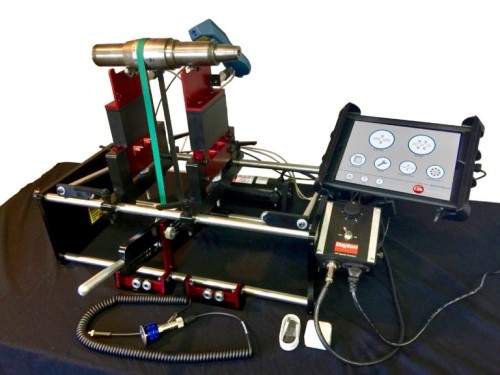
Dynamic balancing measures and corrects these forces while the rotor is spinning, either in a balancing machine or in situ (on-site).
Dynamic balancing is essential for:
- Long or cylindrical rotors
- High-speed equipment
- Industrial fans and blowers
- Pumps and impellers
- Motors and generators
- Heavy machinery
Dynamic balancing addresses both:
- Static imbalance (heavy spot)
- Couple imbalance (uneven weight distribution along the shaft)
This makes it the preferred solution for most industrial applications.
Key differences between Static and Dynamic Balancing
Static Balancing | Dynamic Balancing |
Corrects imbalance in one plane | Corrects imbalance in two or more planes |
Suitable for narrow components | Suitable for long or complex rotors |
Performed while stationary | Performed while rotating |
Addresses heavy spot only | Addresses heavy spot + couple imbalance |
Best for low-speed equipment | Critical for high-speed machinery |
Why Dynamic Balancing matters in industrial applications
In industrial environments across New Zealand, unbalanced rotating equipment can cause:
- Excessive vibration
- Bearing wear
- Shaft fatigue
- Increased energy consumption
- Noise issues
- Unexpected breakdowns
Proper rotor balancing improves:
- Equipment lifespan
- Operational efficiency
- Workplace safety
- Reliability
- Maintenance cost control
For most industrial machinery, dynamic balancing provides a far more accurate and complete solution than static balancing alone.
When should you choose Dynamic Balancing?
If your equipment:
- Operates at high RPM
- Shows signs of vibration
- Has recurring bearing failures
- Has undergone repair or rebuild
- Has had components replaced
Dynamic balancing is likely the correct approach.
It’s particularly important for critical plant equipment where failure isn’t an option.
On-Site Dynamic Balancing in New Zealand
One of the biggest advantages of modern balancing technology is the ability to perform on-site dynamic balancing. This reduces downtime and avoids the cost and risk of removing large components from service.
Field balancing allows adjustments to be made under real operating conditions, delivering more precise results and faster return to service.
While static balancing has its place, most industrial rotating equipment requires the precision and accuracy of dynamic balancing.
Understanding the difference helps ensure your machinery operates smoothly, efficiently, and reliably.
If you’re experiencing vibration issues or want to improve equipment performance, professional dynamic balancing may be the solution.
Find out more about our Dynamic Balancing at the link below.
Summary
Dynamic balancing and static balancing are both methods used to correct imbalance in rotating equipment, but they serve different purposes. Static balancing corrects single-plane imbalance in narrow, low-speed components, while dynamic balancing addresses multi-plane imbalance in high-speed industrial machinery. For most pumps, fans, motors, and heavy rotating equipment, dynamic balancing provides greater accuracy, reduced vibration, improved reliability, and longer equipment lifespan. Choosing the correct rotor balancing method is essential for minimising downtime, lowering maintenance costs, and maintaining optimal operational performance.